FAQs
Educational resources & common questions.
We believe an informed patient makes the best decisions. These are the questions we hear most often — answered in plain language.
We believe an informed patient makes the best decisions. These are the questions we hear most often — answered in plain language.
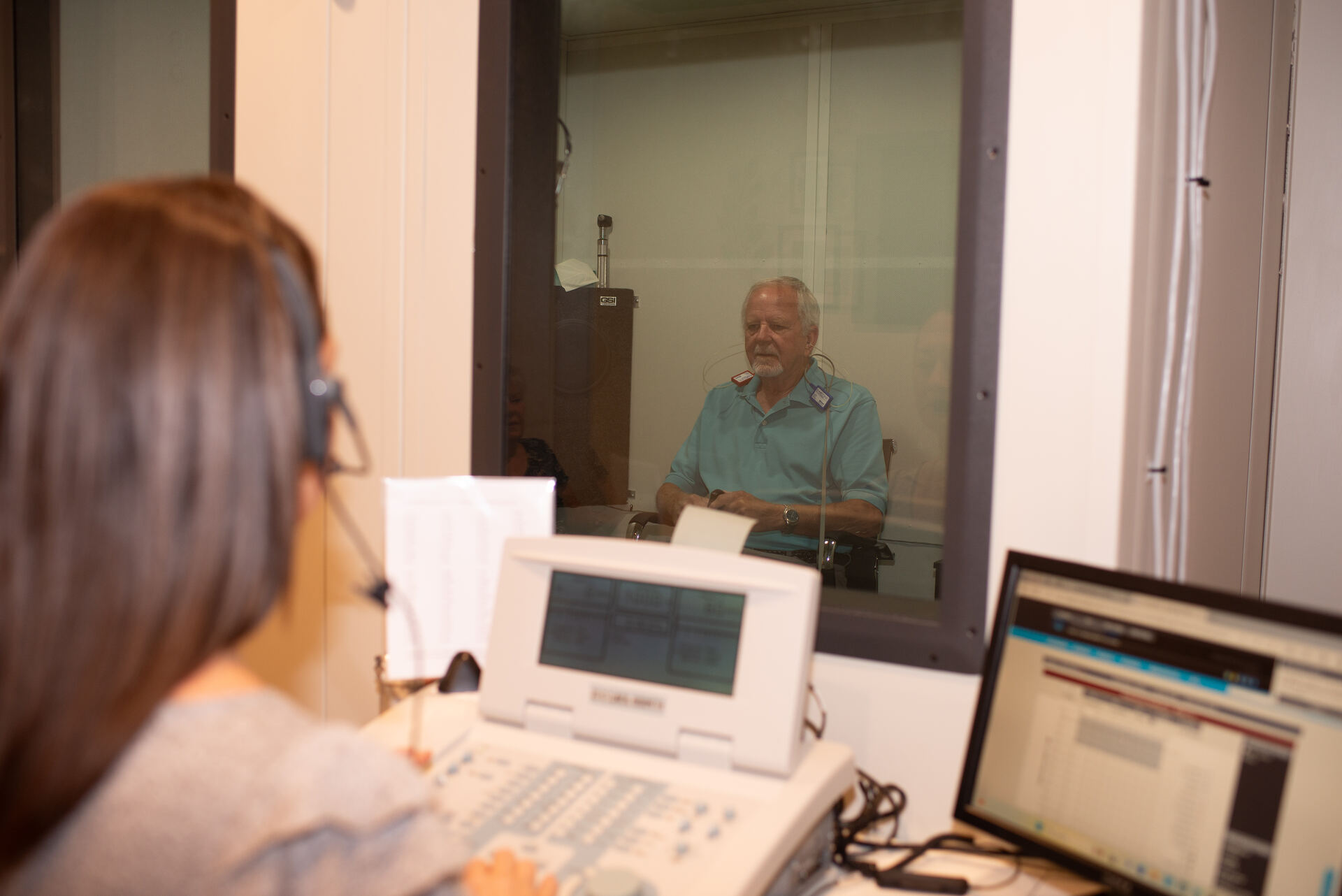
An audiogram is a graph that shows how well you hear different pitches (frequencies) at different volumes. It is the result of a painless hearing test where you signal each time you hear a beep delivered through headphones.
The pattern your results make on the graph tells your audiologist exactly what kind of hearing loss you have, where it sits in the hearing range (low pitches? high pitches? both?), and what kind of treatment will help. You'll get a copy of your audiogram at the end of your evaluation, and your audiologist will walk you through it in plain language.
Hearing loss usually creeps in gradually, so most people notice behaviors before they notice the hearing itself. Common signs include:
If any of these sound familiar, a diagnostic evaluation is the best next step. It's painless and takes about an hour.
If you are 55 or older, a baseline hearing evaluation every year is a smart habit — the same cadence as a yearly physical or eye exam. Hearing changes gradually, and catching those changes early protects your communication, relationships, and cognitive health.
If you already wear hearing aids, annual testing is essential so your devices can be adjusted as your hearing changes. If you are younger and notice any of the signs above or work in a loud environment, schedule an evaluation sooner.
Coverage varies widely by plan. Many Medicare Advantage plans, some employer plans, and some state programs cover part or all of the cost of hearing aids and the fitting appointments that go with them.
We accept most insurance plans, and we verify your benefits before your first visit when you share your insurance information with us. That means fewer billing surprises and a clearer picture of your options before you commit to anything.
Tinnitus — ringing, buzzing, or humming in the ears heard only by the person experiencing it — is often treatable, though rarely cured outright. The most effective approaches combine:
Many patients experience significant improvement in their quality of life even when the tinnitus itself doesn't go away entirely.
Most modern hearing aids last 5 to 7 years with good care. Routine cleaning, regular professional drying (we use Redux® in-office drying as our standard of care), and regular follow-up adjustments all extend device life.
As your hearing changes over time, your audiologist re-programs your aids to match — so you continue to get the most out of them throughout their lifespan.
Your first visit usually takes 45–60 minutes. We start with a conversation about your hearing history and what brings you in, then perform a quick visual exam of your ears, followed by a series of painless listening tests in a quiet testing booth.
You'll receive your audiogram at the end, and your audiologist will walk you through exactly what it means, whether hearing aids are recommended, and what your options are. There is no pressure, no pushy sales pitch — just honest guidance. If you're ready to try devices, our free 30-day risk-free trial lets you experience them in your own daily life before you commit.
Auditory training is exercise and therapy for the ear-to-brain connection. After months or years of untreated hearing loss, the auditory pathways between your ears and your brain weaken — they're under-used. Simply putting in new hearing aids does not automatically restore that connection; the brain needs practice to process clear sound again.
Our auditory training programs — including Neurotone LACE AI Pro — are structured exercises that rebuild speech-in-noise processing and conversation comprehension. Most patients see noticeable improvement within a few weeks. It's one of the most powerful services in audiology and one of the most overlooked.
Yes. We take custom ear impressions in-office and make earmolds tailored to your specific use case:
Properly fit custom earmolds are dramatically more comfortable and effective than any over-the-counter option.
Yes — all of our offices are wheelchair accessible. If you have specific accommodations in mind, please mention them when you schedule, and our team will make sure your visit is as comfortable as possible.
VoyageKC recently featured KC Hearing Center owner Kathryn Grote. It's a great look at how her early experiences shaped a patient-first approach to hearing care 2014 and why education and real-world listening matter.
We're producing a series of short, plain-language videos to answer these same questions visually — including how to clean your hearing aids, what a real-ear measurement looks like, and what to expect from a fitting appointment. Check back shortly, or ask your provider at your next visit.
Our team is happy to talk through anything that's on your mind — no obligation.